The 20-Minute Garden Check
The 20-Minute Garden Check: A Weekly Summer Garden Maintenance Routine That Keeps Everything Alive in the Heat
Most summer gardens do not die from neglect. They die from the wrong kind of attention. They are watered a little every day, fussed over in a panic during a heat wave, checked anxiously and often and shallowly — and they wilt anyway, because frequent, light, worried attention is exactly what a summer garden cannot use. What it needs is the opposite: one deep, deliberate, structured pass each week, and then to be left alone.
That pass takes me about twenty minutes. Four raised beds, a mini greenhouse, and the rooftop animals — a small setup, on purpose — kept alive through the hottest weeks of the year by a single weekly garden check rather than daily hovering. This is the routine, station by station, and the few principles that make twenty minutes genuinely enough.
Why a weekly garden check beats daily watering
The instinct in summer is to water every day, a little, because the surface of the soil is dry and dry soil looks like thirst. But the surface is not where the plant lives. Watering shallowly every day trains roots to stay near the top of the bed, where the sun can find and cook them, and a garden of shallow-rooted plants is a garden that collapses the first afternoon you forget.
Deep, infrequent watering does the reverse. A long, slow soak that reaches well below the surface pulls roots downward, into the cooler, wetter soil where they can survive heat you are not there to fight. So the entire logic of summer garden maintenance inverts: you water less often and far more thoroughly, and you spend the rest of the week not worrying, because the roots are deep enough that they do not need you daily. Less attention, placed correctly, keeps more alive.
That is why the check is weekly. It is not laziness. It is what the plants actually want.
The 20-minute garden check, station by station
The walk has an order, and the order matters, because the order is what keeps it to twenty minutes. I do the same stations in the same sequence every week, so it runs on rhythm instead of decisions.
Water deeply — about eight minutes. This is the heart of the check and it gets the most time. Early morning or evening, never the middle of a hot day, when most of the water would evaporate before it ever reached a root. I water the soil, not the leaves — wet leaves in heat invite disease and do nothing for the plant — and I water slowly enough that it sinks in rather than running off the top of dry, hardened summer soil. The test is simple: push a finger in afterward, and it should be damp well below the surface, not just darkened on top.
Mulch and hold the moisture — two minutes. A layer of mulch over the beds is the single thing that turns a weekly watering into a weekly-enough watering. It shades the soil, slows evaporation to a crawl, and keeps the ground cool around the roots through the worst of the afternoon. In a heat wave, mulch is not optional; it is the difference between water that lasts six days and water that is gone by Tuesday. Each week I just top up anywhere it has thinned.
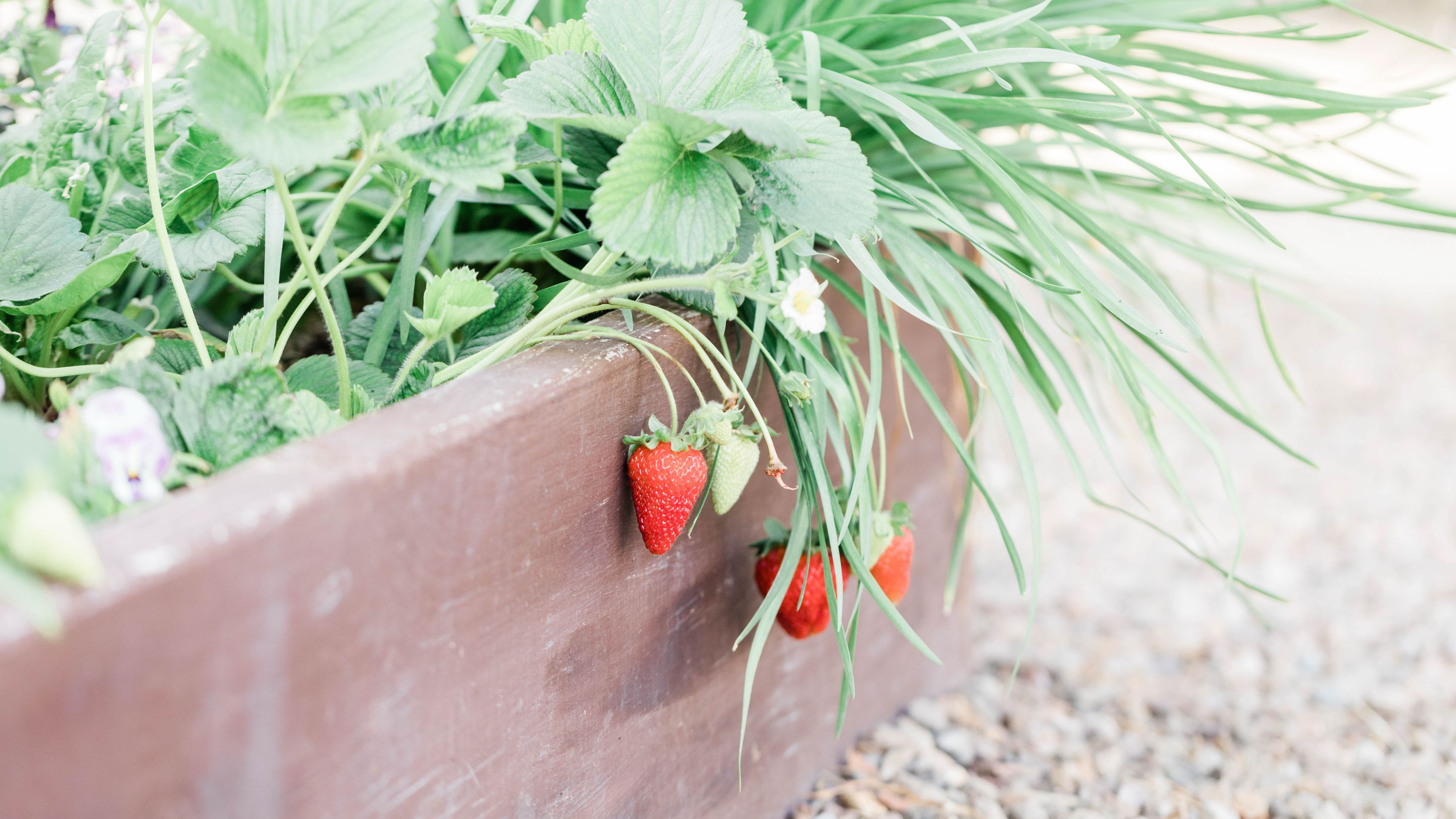
Harvest to keep it producing — four minutes. This is the part people forget is maintenance. Picking is not only the reward of a garden; it is the instruction that keeps it making more. A plant left heavy with ripe fruit or overgrown leaves reads the signal that its work is done and slows down. So I harvest everything ready — the chard and kale before the leaves toughen, anything that has come to size — partly to eat, partly to tell the bed to keep going. A harvested summer garden is a productive one. An unpicked one quietly retires.
Scan for pests and stress — three minutes. A slow look, leaf tops and undersides, for the early signs — the first aphids, the first chewed edges, the first yellowing that means a plant is struggling with the heat. Caught in week one, almost everything is a two-minute fix. Caught in week three, it is a lost plant. The scan is short because its only job is to catch things early, while they are still small.
Succession sow and fill the gaps — two minutes. Wherever something has finished or a gap has opened, I drop in the next round of seed — this is the month I start the autumn sowing anyway — so the beds are never sitting empty in the heat. A bare patch of summer soil bakes hard and grows weeds; a sown one is already becoming the next harvest.
Tend the greenhouse — one minute. In summer the mini greenhouse is the hottest place in the garden, so the weekly job there is mostly about heat, not cold: open it to vent, check that nothing inside is scorching, water what is drying fastest. A closed greenhouse in July can cook its own contents by midday.
The rooftop animals in the heat
The garden check has one more station that is not strictly the garden, and in summer it is the least skippable of all: water for the rooftop animals. Hens, quail, and rabbits do not cope with heat the way we do, and in the hottest stretch their water matters more than almost anything in the beds. So each pass includes fresh, cool water, a check that their shade is holding through the afternoon, and a look that everyone is comfortable rather than panting in a corner. It takes two minutes and it is non-negotiable, because a bed can recover from a hard day and an animal in real heat cannot.
The few principles that make twenty minutes enough
The check is short because the garden was set up to need a short check. Deep watering builds deep roots, so a missed day is survivable. Mulch holds the moisture, so the watering lasts. The right plants are in the beds — things suited to the season rather than fought against it. And the scale is honest: four beds and a greenhouse, not an acre. Twenty minutes is not a trick of speed. It is the natural maintenance load of a garden built small and watered deep.
This is the whole quiet argument of a well-run garden, and of a well-run anything: the work shrinks not when you hurry, but when the structure underneath does more of the holding. A garden that needs you daily was designed wrong. A garden that needs you deeply, once a week, was designed to survive your real life.
Start with one deep watering
If your summer garden is struggling, do not add more daily watering — that is almost certainly part of the problem. This week, do the opposite. Water once, slowly and deeply, until the soil is damp well below the surface. Lay down mulch to hold it. Then leave it alone and watch how much better it does on less. That single reversal — deep and weekly instead of shallow and daily — is the foundation the entire twenty-minute check is built on.
The full weekly routine, the seasonal sowing schedule, and the small-space setup we use live inside VYNCY Garden, if you would like the structure built out for you rather than assembled from scratch.